Harbour Lane Motors · demoIllustrative · AI-generated 3D model, rendered
Every site. Every car. Running live.
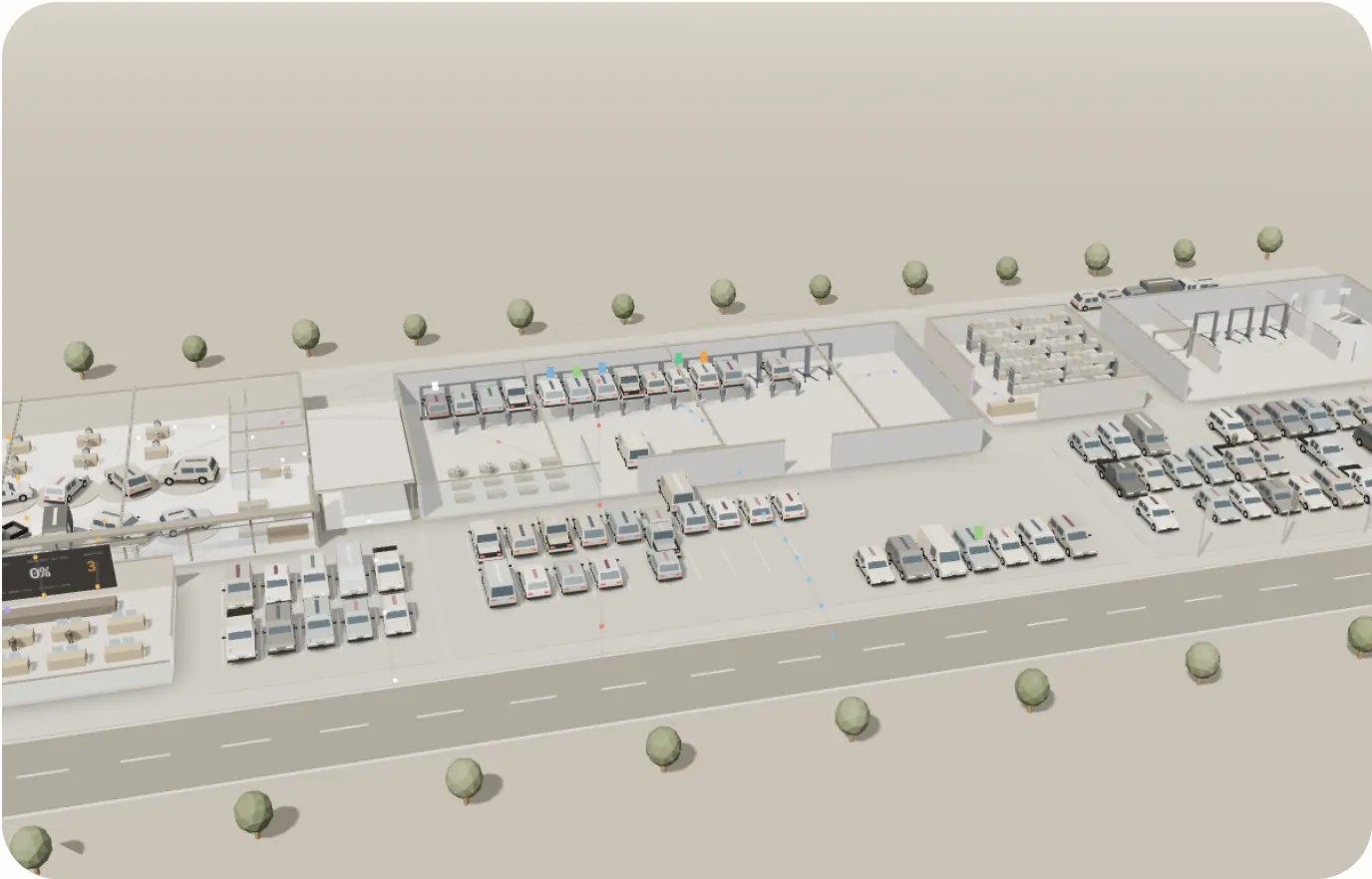
This is a working model of a fictional dealer group: 48 cars, three sites, and every department from the forecourt to the workshop, ticking through a simulated day. Press play and watch it run.
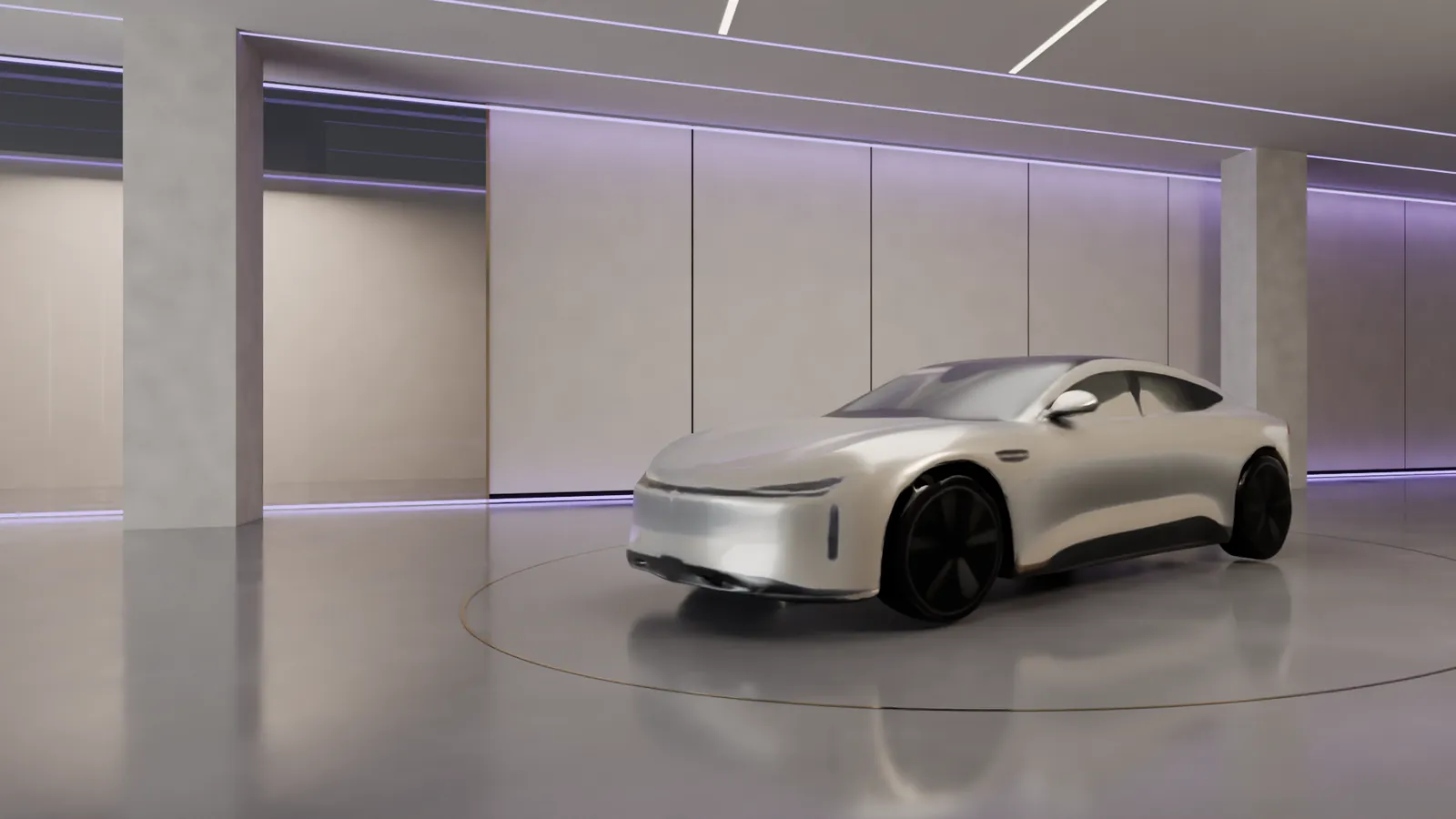
The car: an AI-generated 3D model made by Kate Hudson, illustrative, not a vehicle in stock. Car and showroom rendered in Blender by assembl, 72 frames a turn. Drag to turn it.
Simulated
A Tuesday at Harbour Lane, at twenty times speed.
It's 8:02 in Auckland. Hoists are filling, three people are already on the floor, and a lead came in overnight for a family SUV. Every number below is simulated. The shape is a real dealer group's: branches, stock and departments.
Illustrative · render
Simulated day–
Eight departments, one live day. Tap one to open its numbers.
Simulated
Somebody's AI just asked about one of your cars.
Buyers are starting to shop through ChatGPT and Claude. Instead of scrolling listings, they type 'find me a hybrid SUV under $40k near Albany' and their assistant goes looking. The agent desk is the counter where those assistants get served.
Simulated · nothing is sent to anyone
“Is the 2019 Toyota Aqua still available? Book me a test drive on Saturday.”01
The assistant asks.
A buyer's AI asks whether the 2019 Toyota Aqua is still available and books a Saturday test drive.
Price · $14,990
Kilometres
Engine and fuel
Make, model, year
WoF expiry · not shown
Money owing · not shown
02
The desk checks.
It reads the dealer's own listing: price, kilometres, and the details the law says a buyer must see. If something's missing, it says so.
Test drive · Saturday 10 am2019 Toyota AquaApproveDecline03
A person says yes.
Nothing is held or booked until one of your salespeople approves it. One tap.
Receipt · TD-25A32019 Toyota AquaTest drive approved · Sat 10:00Asked by: buyer's assistantApproved by: sales consultant✓ Same record for all three04
Everyone gets a receipt.
The buyer, the salesperson and the dealer all see the same record of what was asked and what was agreed.
Simulated · fictional stock and staff
Watch the agent work an enquiry.
Pick an enquiry. The agent searches, reads the notice, runs the checks and recommends. Then it asks: a hold or a test drive waits for a person at the dealer, and every decision leaves a receipt.
The agent's work
The desk above replays records from the lab's MCP endpoint. The live desk calls it as you watch.
Every tool call above (search_cars, get_car, car_check, running_cost, hold_car, book_test_drive) was made against the lab's MCP endpoint on 2 November 2026 and its record saved; the desk replays those records in the same shape, trimmed to what it shows, with site names below region level generalised. The agent's reading of the enquiry, its recommendation and the buyer's reply are scripted, not generated. The staff, the stock and the dealer are fictional. Nothing is held, booked, sent or stored.
The NZTA register counts inside car_check are real figures for the model (Motor Vehicle Register open data, CC BY 4.0), as read on that day. The receipt's SHA-256 is computed in your browser over the record as canonical JSON.
Agent-ready · live endpoint
Your assistant can call this too.
Six tools over 48 Simulated cars.search_cars, get_car, car_check and running_cost read; hold_car and book_test_drive return a request a person would approve.
Every listing as labelled data. The Consumer Information Notice field by field with its truth label, free test-drive times, and NZTA's register counts for the model.
Open MCP over HTTP. JSON-RPC 2.0, no key, CORS open. Add it as a connector in ChatGPT or Claude, or point your own agent at it.
You are the buyer's assistant. Pick a request, then switch seats and approve it.
You're the buyer
The car the assistant finds stands here.
Every desk speaks the same record.
Sales, finance and service read one record. Published on the dealer's instruction, it's what an agent-native marketplace reads, alongside Trade Me, AutoPlay and Motorcentral.
The record, the hash and the tools
The tools.search_cars, get_car, car_check and running_cost only read. hold_car and book_test_drive are “act with approval”: they return a request that a person at the dealer must approve, and the assistant asks the buyer before calling them. Nothing is held, booked, sent or stored. Here the desk calls the assembl lab's MCP endpoint, /api/mcp/ (JSON-RPC over HTTP); every request and response is in the card's inspector.
The record. Every approval or decline writes one record in one format, assembl.dealer-record/1: the car, a snapshot of its Consumer Information Notice with each field's truth label, the check, the request (tool, arguments, reference), the decision (outcome, approver, desk) and both timestamps. Sales writes it; finance and service read the same record, which is how one desk becomes many, and many dealers become a marketplace.
The proof. The record is written as canonical JSON (keys sorted) and hashed with SHA-256 in this browser (WebCrypto). Each record carries the previous record's hash, so the ledger is a chain: change any earlier record and every later hash stops matching. “Verify the hash” recomputes it here. Every record is labelled Simulated.
Pick a car. Get a reel, a post and captions in seconds, built from the car's own listing. A person checks it before anything goes out.
Drafts only · nothing is posted
Captions
Written from the listing in this browser. No AI service, nothing sent.
DraftTick all three to mark it ready.
How the drafts are made
The reel is four scenes drawn on a canvas from the car's own photo: the car, the price, the facts, and a call to action. It's recorded in your browser with MediaRecorder (WebM where supported), with a caption file to match. The post image is drawn the same way at 4:5.
Captions come from hand-written templates filled with the listing's own fields. Nothing is generated by an AI service and nothing leaves this tab. Every frame and caption card carries the listing's truth label.
A listing says what's for sale. A campaign gives people a reason to look.
Campaign ideas built from Harbour Lane's cars today. Each comes with a week of posts already written, a key visual and what a person has to approve.
Ideas · drafts only · a person approves every offer
How the ideas are made
Each idea is a hand-written template filled from the cars in stock today: the budget band with the widest choice, the most economical cars for the trip, the highest tow ratings, the cheapest first cars. The key visual is drawn on a canvas in this browser. No AI service writes the copy and nothing is posted. Anything with a prize, a price or a person's photo is marked for a person to approve.
Every ad checked before it runs.
Example campaigns against the brand rules. Hollow marks need a fix.
The five brand checks
Co-op money, claimed.
Hours off the team each month, and co-op claimed with full evidence.
Hours and rebate assumptions
Every brand, built brick by brick.
One brick model for every brand on Harbour Lane's yard, built and rendered in Blender. Tap a brand to see its cars.
Illustrative · brick models, not real cars
Each model is a generic body in the shape that brand sells most here, laid in small bricks: no badges, no grille, no real model's design. The colours are assembl's, not the brand's.
48 cars, every one a render.
Simulated stock for a fictional dealer, so you can see the idea without anyone's real cars.
Render · simulated car
Renders from assembl's 3D car kit, every one on the same backdrop at the same angle.
Every part, with an honest time.
A health-check finding becomes a part, a shelf or a supplier, a price and a promise. The advisor approves every message.
Proposed partnerPartly could identify the exact part and its fitment from the finding. Not connected: shown as a proposal.
How the month is simulated
What it would take for real.
Three things: your stock feed, a person on each site who can approve, and a week to switch it on. We'd start with one site.
Drop in a CSV from your DMS, or use one of our made-up samples. The file stays in this browser tab. Nothing is uploaded.
Drop a CSV here, or choose a fileDeals, stock, repair orders, parts, leads, spend, footfall or health checks
The file's table, rows accepted, columns ignored and personal details dropped show here, and the twin's figures switch to Your data.
The six tables, and what each system feeds
Six aggregate tables, no personal details: vehicles in stock, deals, repair orders, parts stock, leads and marketing spend, plus showroom footfall and health checks when counters and a health-check tool are in place. Columns that look personal (names, phones, emails, addresses, plates, VINs) are dropped before anything is read.
AutoPlay: stock listings, leads by source, first response, appraisals, test drives and deal outcomes. Access and fields are agreed with AutoPlay.
Motorcentral or the DMS: repair orders, technician hours, parts and stock cost, which AutoPlay doesn't hold.
Door counters, if fitted: people in per showroom per hour, anonymous.
Read-only by design: aggregate tables in, nothing written back. AutoPlay lists its DMS connections in its DMS integration overview; method, sync frequency and API terms aren't published, so they're confirmed with AutoPlay. Trade Me and the dealer's website keep their feeds exactly as today.
What's real, and what isn't.
Every number on this page carries one of these labels.
Source
Published or measured, with the source named.
Your data
Read from an export you supplied, in this tab only.
Estimated
An assumption or benchmark, with its basis in the drawer.
Simulated
Made by the model. Never a real figure.
Proposed
An idea or partner not yet in place.
Sources and benchmarks
Deloitte NZ Dealership Benchmarks 2026: department ratios, gross per unit, F&I income, service and parts margins, overheads (top 30% of 200+ NZ dealers).
Published lead-response research (US studies): how response time changes appointment odds. Estimate.
MBIE weekly fuel price monitoring: fuel at handover and running costs.
IRD fringe benefit tax rules and rates from 1 April 2026; the September 2026 Bill is proposed, not law.
NZ Transport Agency Waka Kotahi, Motor Vehicle Register (open data, CC BY 4.0): the register check, live through car_check.
MBIE Consumer Information Notice template: the notice facts on every listing.
 Simulated